

Composting is one of the easiest and most impactful eco‑friendly habits you can adopt, especially in the UK where food waste makes up a large portion of household rubbish. Composting is the simple process of transforming everyday organic waste into nutrient‑rich soil that boosts plant health, reduces landfill waste, and supports a more sustainable lifestyle. Whether you have a large garden in Monmouthshire, an estate in South Gloucestershire or a small patio in Bristol, you can start composting with minimal effort and see real benefits within months. In addition to creating mulch, soil conditioner, potting compost, the value of finding somehwhere to put your garden ‘waste’ efficiently is of the highest value.
I love composting. Beyond the process itself, I love how it creates so much tension between gardeners as to how, what and when. I’m very much in the school of the no-dig guru Charles Dowding who composts everything. I occasionaly draw the line at excessive amounts of Ground Elder, Couch, Japanese Knotweed, Butterbur and Bindweed (Field & Hedge) but in the main, everything goes.
The bigger the pile, the more you add to it, the more active it becomes and more effectively breaks down anything untoward. It is worth being aware a weed such as dock has seeds that would need over 60 degrees Celsius for more than a week to be killed via composting but balance that against a single dock plant that can produce up to 60,000 seeds which can lay dormant in the soil for 20-50 years, I think the presumption that you can make your compost and soil clean of all pernicious weeds is too ambitious. Compost, creates healthy soil that is easy to weed.
Form and function. Maybe I’m a bit over the top when it comes to compost bins but you cant deny what a thing a beauty this is (my own design).
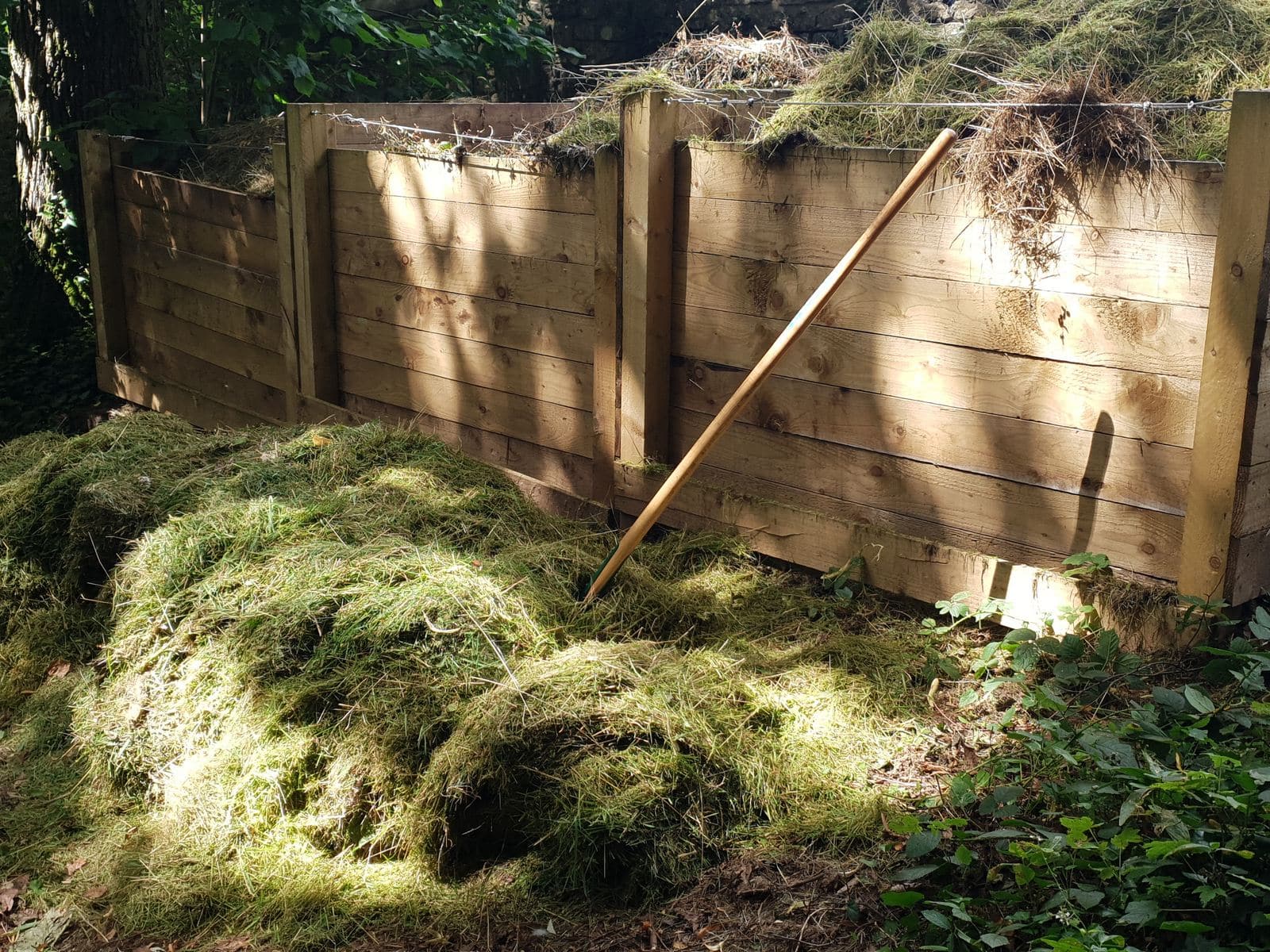
We try a mix up the content, particularly volumes of grass as it can get somewhat anaerobic if too wet, or remains dry if too …dry. There’s not ususally enough time during the growing season to turn the piles so we rely on seasonal variation to mix up the contents.
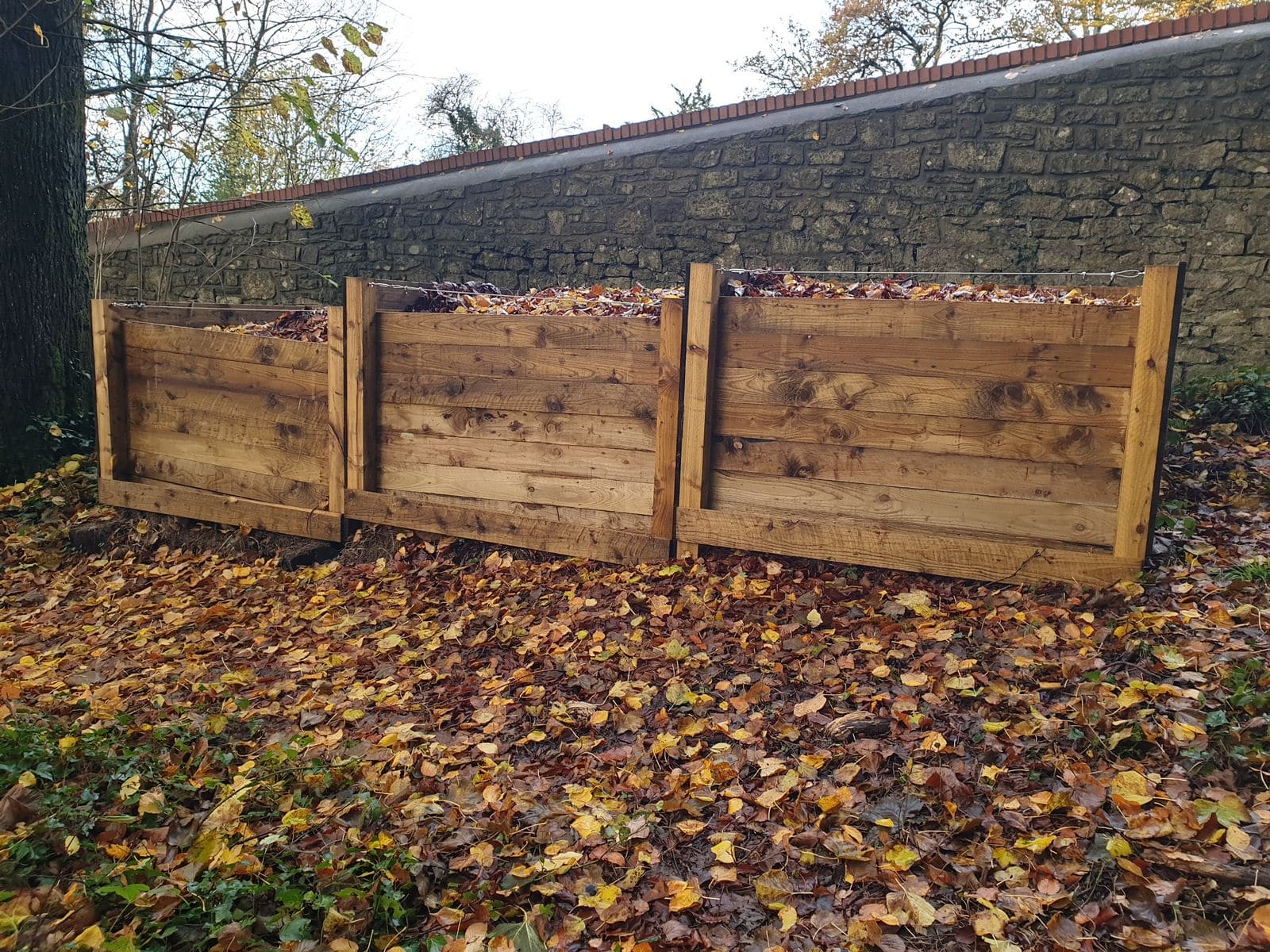
Its interesting to note that if you are making leaf mould, the breakdown process is principally fungal rather than bacterial, at least initially, so advice is not to turn your leaf piles as this disrupts the fungal mycelium doing the rotting down.

The newly construcuted bins at a farmhouse in Monmouthshire where we grow alot of fruit and veg for the family. We use a compact tractor on this estate so the bins are a bit larger and more productive. Not so practical if turning, filling and digging out by hand.