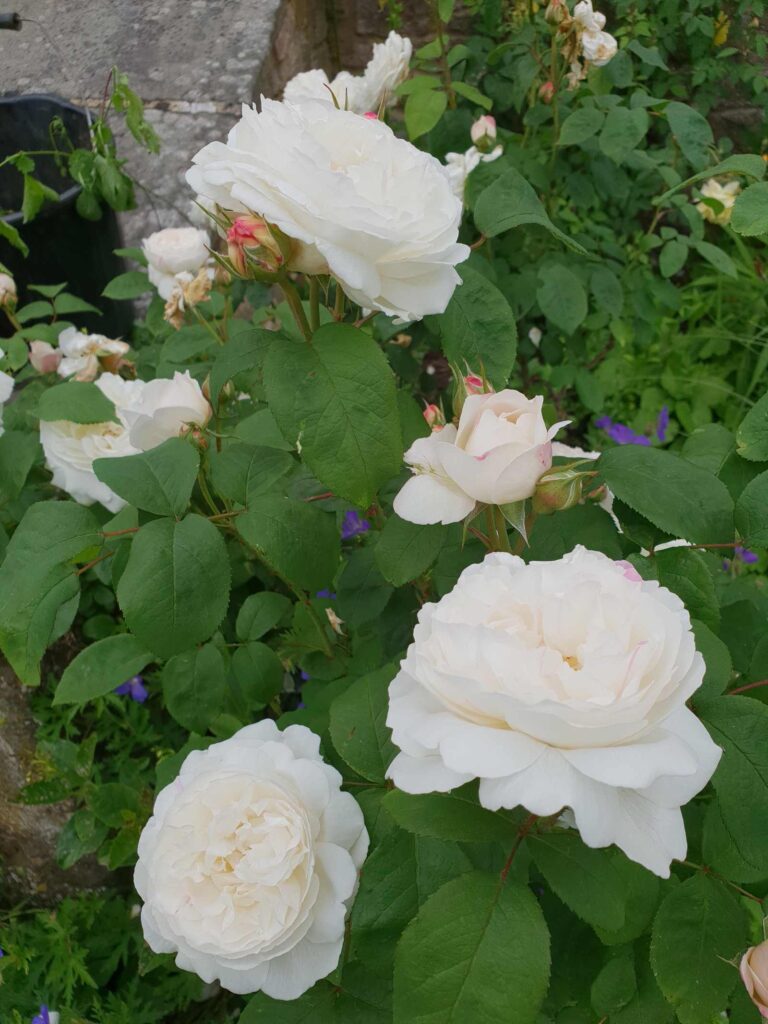
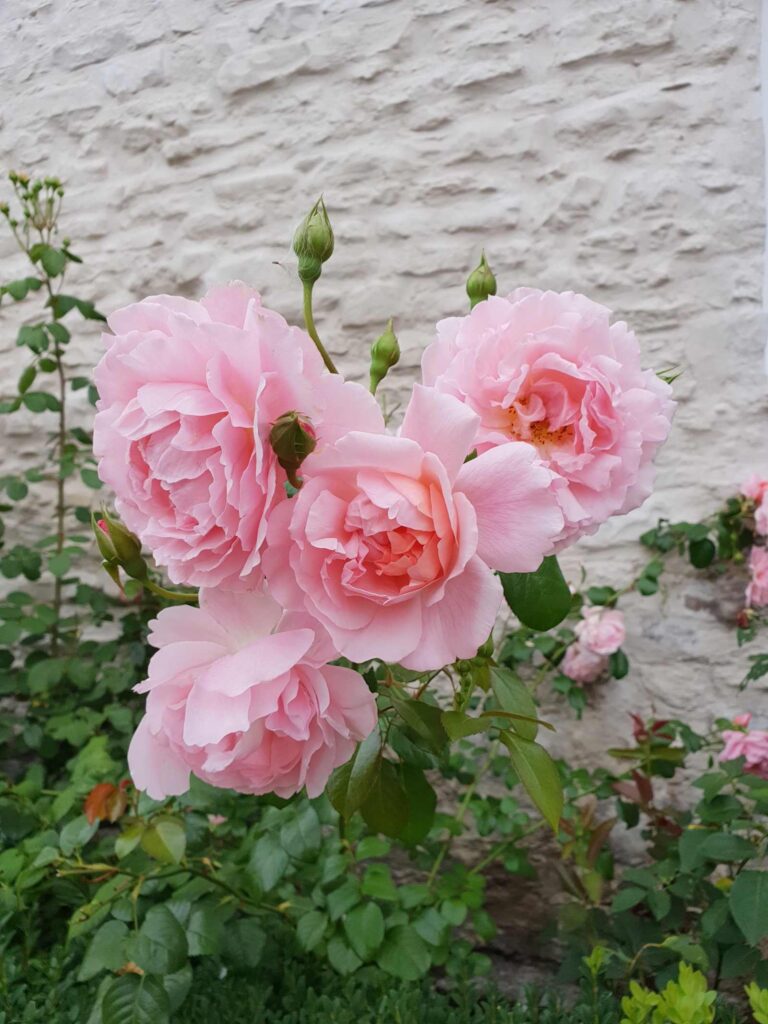
The beauty about the depths of winter is that your thoughts turn to pruning jobs for the year ahead and you can browse through lots of photos from long summer days and delicious flowering shrubs. Pruning roses in South Gloucestershire & Monmouthshire is part of Gareth’s regular garden maintenance service.


Why do we Prune Roses?
Like alot of gardening, pruning roses is simply about working with the plants natural growth & flowering habitat; in this case flowering best on healthy young wood – the older branches losing vigour and slowly dying off. A sober message to us all. Pruning out dead, diseased and dying wood, developing a strong open framework with good air circulation and an open structure to show off the best individual, & clustered, blooms.
When to Prune A Rose
When your secateurs are sharp is the facetious answer. The better answer is that it depends on what type of roses you have (see below) and how cold a part of the UK you are in. With each successive frost and as winter advances, woody plants will progressively develop their winter hardiness (changes in cell structure); typically being most cold tolerant around mid-January or February. The ideal time for pruning roses is late winter, early spring, when buds are swelling and frosts are on the decline. An Autumn ‘tipping’ back is traditionally recommended, to protect the weaker rooted from damaging wind rock. Whilst a good buffeting is good for young trees to develop a healthy and robust root system, roses can be more precious and need mollycoddling (but not all).
For the curious, here’s an interesting article on the hardiness of rambler roses to changing climate conditions . 15 selected rambler rose cultivars were observed in the years 2000–2016 in the Polish Academy of Sciences Botanical Garden, observing, amongst other things, their frost resistence. As I’ve always worked in the mild, mild west I didnt appreciate how different cultivars have such different frost hardiness.

Types of Roses
There are a bewildering array of types of roses; Hybrid teas, floribundas, ramblers, climbers, shrub, polyantha, patio and ground cover. Each group has an ideal way of pruning to best develop their flowering potential. Ground cover roses, bred by people who have never done a days weeding in their life should be made a criminal offence (by the way). If you aren’t sure what type of rose you have, just look to see where last years blooms flowered best and prune to encourage production of that age of stem.
How to Prune a Rose
There is technically a right way to prune roses but, in the short term, flowering is more a reponse to seasonal temperature variations than pruning. Bad pruning shows up in the longer term as the flowering potential of your rose gets lost in a thicket of moribund stems. Ideally, outward facing buds creating a well balanced open shrub. Light, air, shape. Six buds from the base for repeat flowering Hybrid Teas or tying in 6ft whippy new growth on once-flowering ramblers.
Renewal pruning for ramblers, spur pruning for climbers & shrubs. In principle, the same techniques for pruning fruit trees.
Felco secateurs or a quick once over with a hedge cutter? Please not the latter! You might get good results initially but the build up of dead, diseased and dying wood will be quick, unsightly and lead to a loss of good flowering wood. Try and picture your rose on a three year growth cycle.

I was taught to prune at 6 buds from the base, but this was only good for hybrid teas, beloved of public parks and village flower shows where the biggest and best bloom was the only goal. Having a rose as a flowering shrub in its own right, rather than all about the first prize bloom became more of thing with the popularity of shrub roses bred by David Austin. These old fashioned shrubs with complex flowers, good disease resistance and outstanding fragrance became the new benchmark. Taller, more informal than the hard pruned hybrid teas, these shrub roses flower best on side shoots of a more mature framework rather than the vigorous annual growth of the hybrid teas and floribundas. They are therefore pruned to a more mature framework, flowering on side shoots off mature stems. Rather like shrubby climbers. Its the ramblers that can be problematic, as pruning back the long whippy growth can often mean cutting off the best flowers for the year. Problem beasts especially when planted on pergolas and trellis that don’t provide enough space.